Bold

Photo
Vienna 2023

Architects often employ color blocking to emphasize specific zones or elements of a building, providing a clear visual hierarchy. This approach allows for the creation of focal points, guiding the observer’s gaze and shaping their experience of the space. Exterior facades, interior walls, and even structural elements such as columns or beams become canvases for the deliberate application of color.

Memento Mori

Photo
Vienna 2023

The photo shows the pathology building of the Vienna Hospital on the Steinhofgründe, opened in 1907.

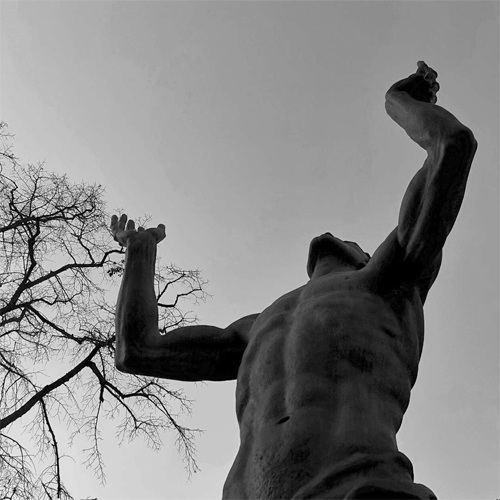
The Memento Mori principle, translated from Latin as “remember that you will die,” serves as a poignant reminder of life’s impermanence. Rooted in ancient philosophy and art, this concept encourages individuals to contemplate their mortality, fostering a deeper appreciation for the present moment and a mindful approach to life.

The roots of Memento Mori can be traced back to ancient Rome, where it was a central theme in Stoic philosophy. Philosophers like Seneca and Marcus Aurelius embraced the idea as a means of cultivating resilience and wisdom. In medieval Europe, the concept found expression in art, particularly in the form of skeletal imagery and symbols of death, serving as a visual reminder of life’s fleeting nature.

Tetris

Photo
Vienna 2022

The Metropolitan is a residential tower located in the Sonnwendviertel district of Vienna, Austria. The building was designed by the architectural firm DMAA and completed in 2021. The building is a standalone structure and has become a part of the new skyline of Vienna. The Sonnwendviertel district comprises around 5,500 apartments for about 13,000 residents, 20,000 jobs, a school campus, office buildings, and numerous stores as well as a park of about 7 hectares.

Cubist architecture emerged in the early 20th century, inspired by the Cubist art movement1. The leading Cubist architects were Pavel Janák, Josef Gočár, Vlastislav Hofman, Emil Králíček, and Josef Chochol.

This kind of architecture is characterized by the use of geometric shapes, sharp lines, and cubic, unaligned windows. The architects of the movement borrowed heavily from cubist art regarding geometric forms and shapes, diverse elements could be superimposed, made transparent, or penetrate one another. The style was a rebellion against realism and art, and served as a contradiction to what architecture was supposed to look like.