
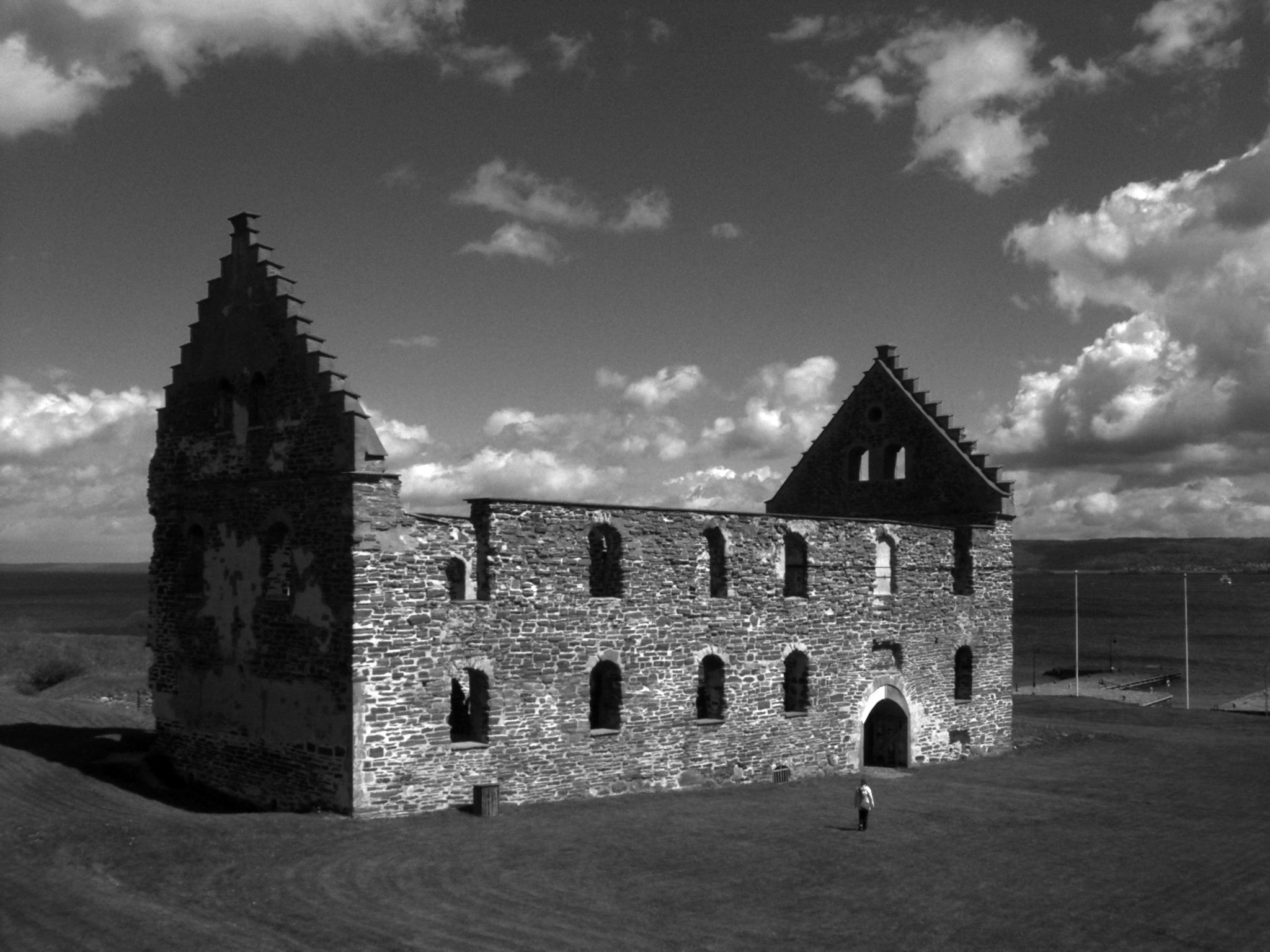
Photo
Visingsö 2004
“Visingsborg” is the designation for a county and a castle on the eastern side of the island Visingsö in Lake Vättern, Sweden. Both are historically closely connected with the Brahe family.
The castle was built in the 1560s as a square with four towers and a moat. Stones from the Alvastra Monastery were also used in its construction. The old castle on Visingsö, Näs slott, had long been a ruin by this time. The county included locations on the island as well as in Småland and Västergötland, totaling 468 farms in 1569 and an additional 100 in the 1640s. In 1654, Count Per Brahe the Younger obtained jurisdiction over the inhabitants of Visingsö.
As a result of a fire on the night of December 22 to 23, 1718, the castle was ruined. Russian prisoners of war from the Great Northern War, relocated there at the time, were accused of starting the fire.
The builders of the castle were:
- Per Brahe the Elder constructed the west wing.
- Magnus Brahe, son of the former, built the south wing, which with its halls and other chambers constituted the most stately part of the castle.
- Per Brahe the Younger added a north wing for the servants. During his time, a harbor was also established. The castle was crowned with six towers with gilded spires. Inventories from his era show an extensive library and an armory with weapons for 800 men. The ramparts were equipped with cannons, and a small army of 200 men was stationed in Visingsborg. Additionally, Per Brahe the Younger built Brahehus as a widow’s residence for his wife. Against the church’s resistance, he also founded a school on Visingsö, which was established in the church of Kumlaby.
 viennarightnow